What “with horses” can mean
Put horses in a retreat title and you could be describing almost anything: trail rides between yoga classes, an afternoon grooming rescued horses at a sanctuary, or a facilitated session in a paddock where you never go near a saddle. They're different experiences with different requirements, so the first job is working out which one a listing is actually offering.
The field has been tidying up its own language. A consensus document written by practitioners and organisations in the United States, summarised by the University of Kentucky's equine programs, recommends equine-assisted services as the umbrella term, groups the work into therapy, learning and horsemanship, and recommends retiring loose labels such as equine therapy. Under that framework, therapy is something licensed professionals do within their own discipline, with horses as part of it.
A retreat is usually closer to learning or horsemanship than to therapy, and that's how this guide describes the programmes in it. If a retreat describes its horse work as therapy, it's fair to ask which licensed professional delivers it.
Groundwork or riding
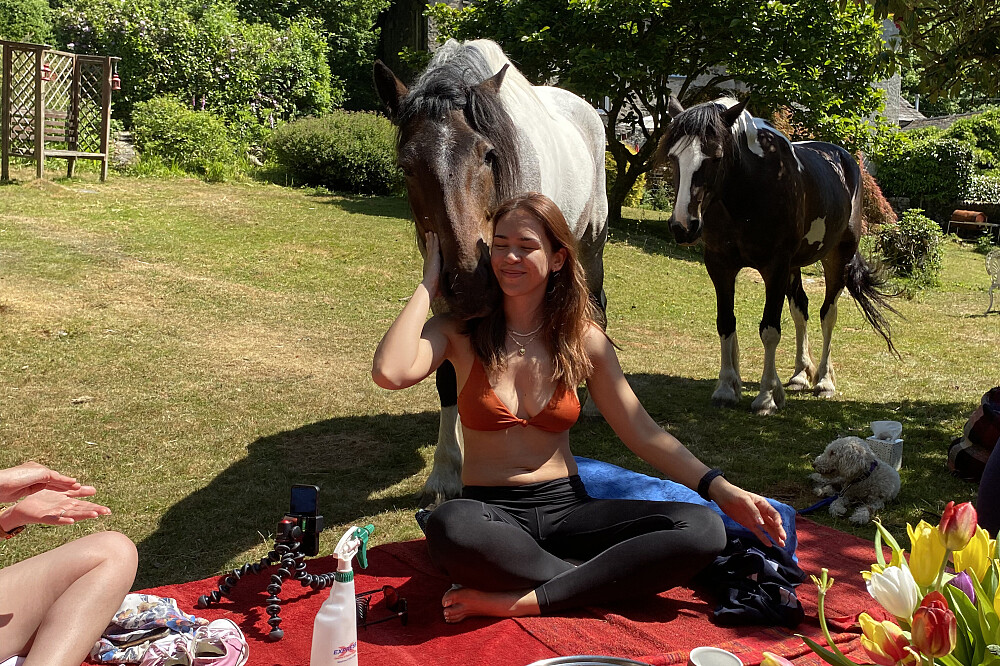
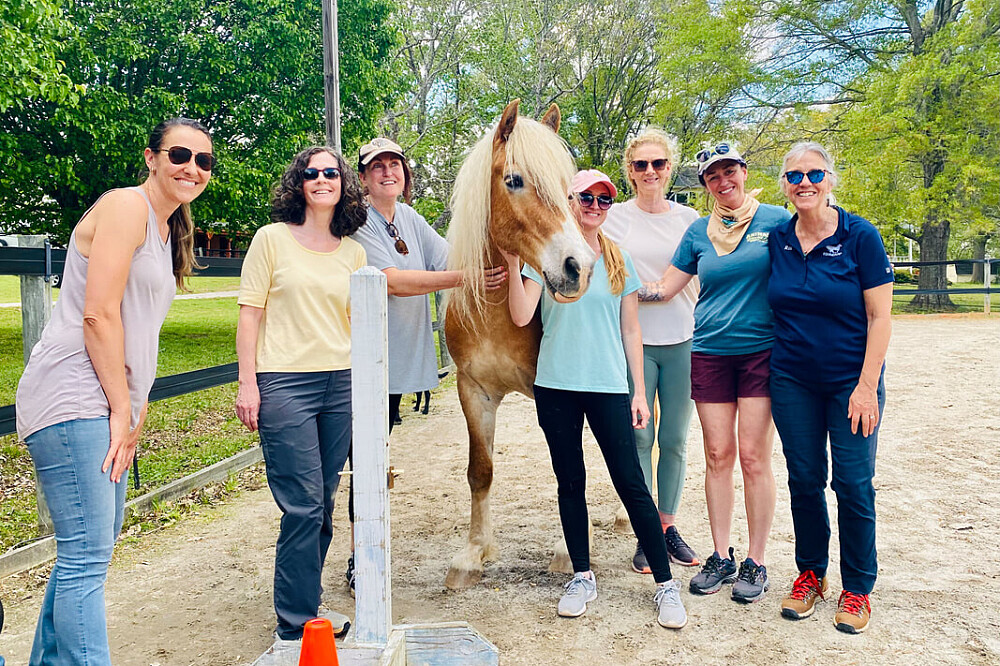
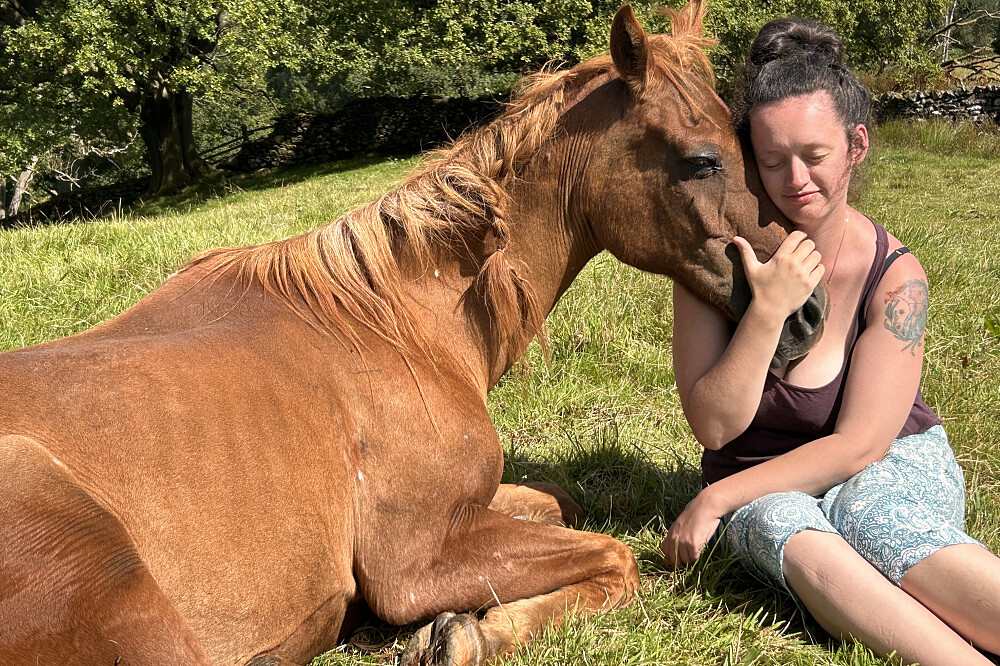
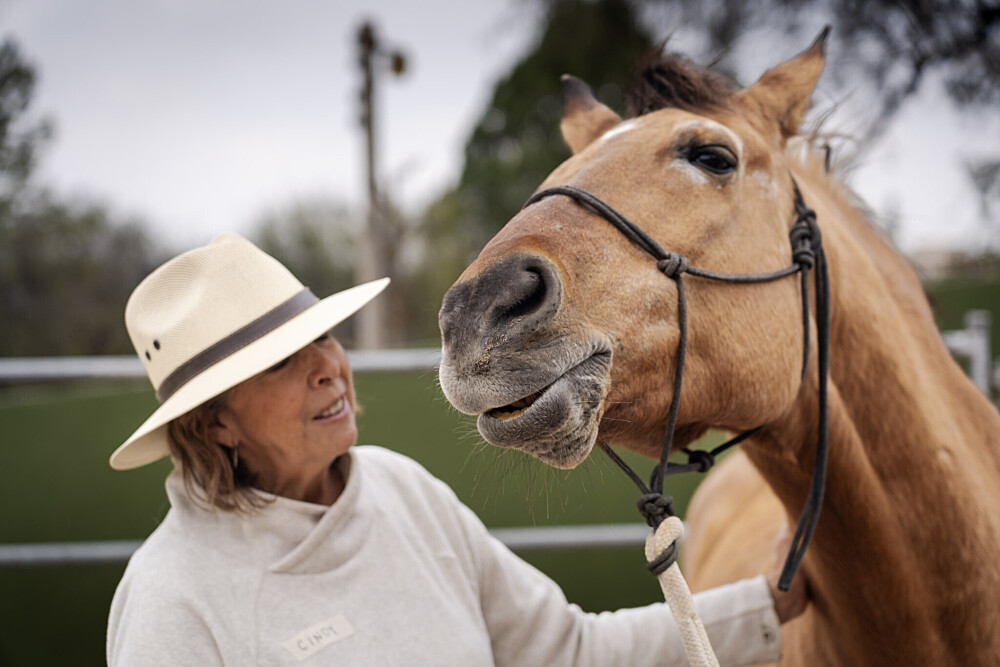
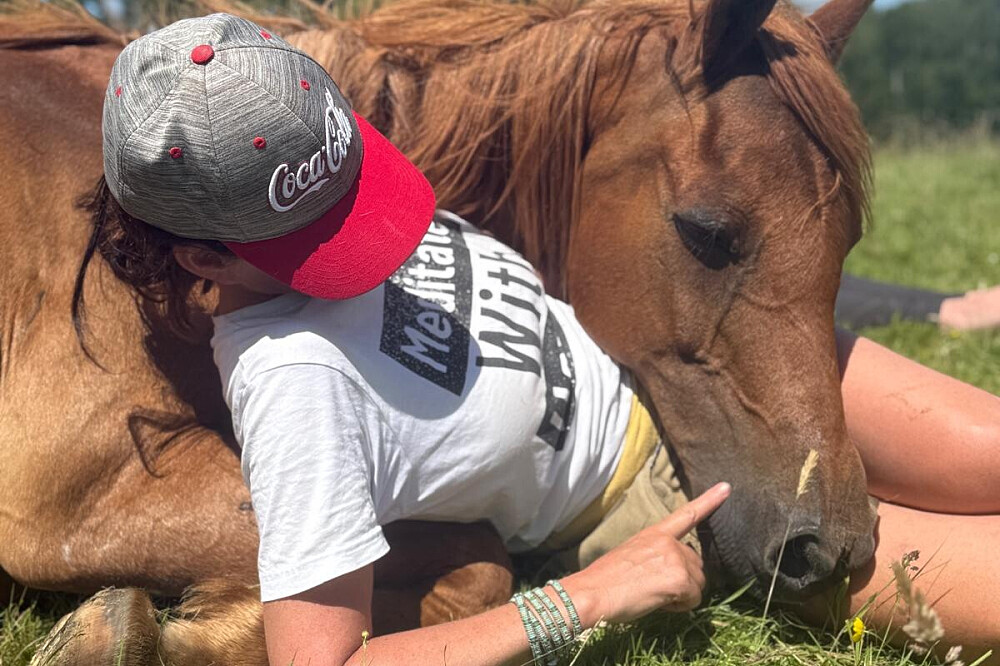
Groundwork is everything you do with a horse while your feet stay on the ground: approaching, leading, grooming, or simply spending time in a field with a herd and noticing how the animals respond to you. In a facilitated session a guide sets a simple task, such as asking a horse to walk beside you or to move around a pen without a rope, and then talks it through with you afterwards. Horses react to posture, tension and hesitation, which is why people find the sessions revealing, and why you don't need any experience with horses to take part.
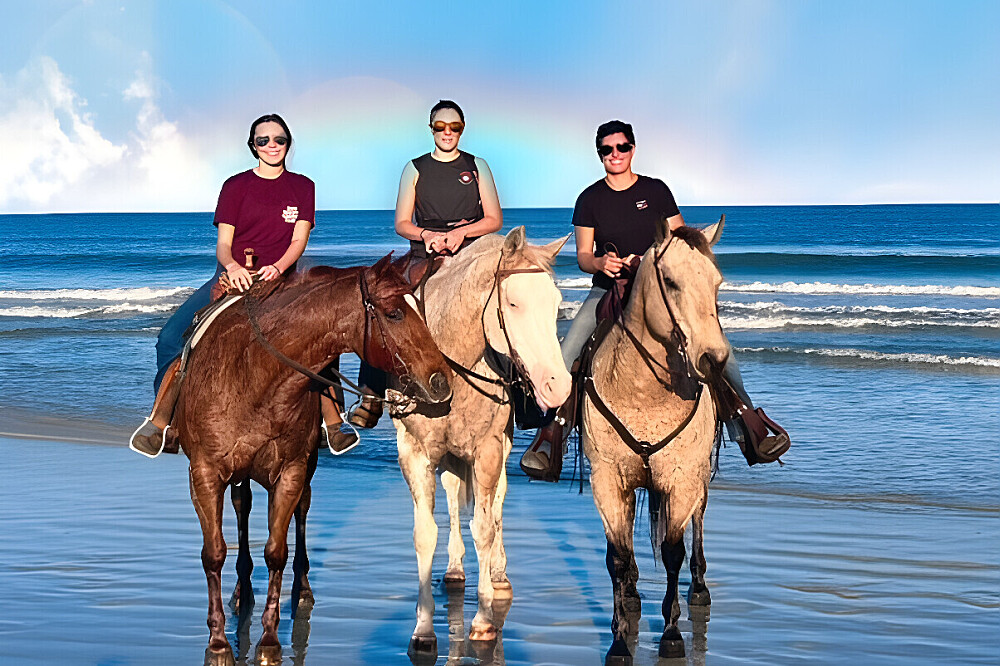
Riding puts you in the saddle, usually on trail rides through the landscape and sometimes with lessons for beginners. It's more physical and carries the ordinary risks of riding, so expect questions about your experience and your weight, a helmet, and a waiver to sign. Rider weight limits exist for the horses' welfare, and a responsible host sticks to them.
Plenty of programmes mix the two, and some rule riding out altogether. The country tables further down show what each host's own description says about riding. Where it doesn't say, ask before you book.
What the days tend to look like
Most programmes build the day around the horse sessions and fill the rest with something quieter: yoga or meditation on some retreats, writing, walking or plain time in the landscape on others, with long, unhurried meals in between. Groundwork sessions are often shorter than people expect, because focused attention tires horses and people alike, and a good facilitator leaves time afterwards to talk through what happened. On riding programmes, the longer rides tend to go out in the cooler part of the day.
Some retreats pair horses with silence, so the sessions replace conversation rather than prompt it. If that appeals, ask how strictly the silence is kept, whether the facilitators speak during sessions, and what happens at meals.
Who these retreats suit, and who they don't
They suit people who find talk-heavy retreats hard going and take more from doing than discussing; people who have always been curious about horses but never had a reason to spend time around them; and anyone who wants a retreat with a lot of time outdoors at an unhurried pace. Experienced riders who want their time in the saddle to feel reflective rather than like a trek will find the riding programmes worth a look.
They don't suit everyone. Skip them if you have a serious allergy to horses, hay or dust. If you're genuinely frightened of large animals, think about whether you want to work on that on holiday, although good facilitators are used to nervous beginners and groundwork can start from the other side of a fence. A retreat is not treatment for a mental health condition and isn't a substitute for care from a qualified professional. And for riding programmes, if you're pregnant or have back or joint problems, check with your own doctor before you book.
Expect mud. Horse days are spent in fields, barns and paddocks in all weathers, and they start early. If your idea of a retreat is a spa robe, choose a programme where the horse sessions are one part of the day rather than the whole of it.
Questions to ask a host
- Who runs the horse sessions, and what's their background, both with horses and with people? If they mention a training organisation, ask which one.
- How many horses are there, how many people share a session, and how much time do you spend with the horses each day?
- Is riding included, optional or not offered? If it's offered, is there a weight limit or an experience requirement?
- What should you wear? Riding needs boots with a heel; groundwork needs sturdy closed shoes you don't mind getting dirty.
- What happens in bad weather?
- How are the horses kept? Do they live out together as a herd, and do they get days off?
- Is guest activity covered by the host's insurance?
Good hosts answer these without hesitation, and most of the answers tell you as much about how the horses are treated as about how you will be.
Programmes by country
The programmes in this guide are grouped by country below, each with what the host's description says about riding and a note on the setting where it helps.
United Kingdom
British programmes run in real countryside and real weather. Pack waterproofs and boots whatever the season, and expect short days in winter.
| Programme | Length | Riding (per the host) | From |
|---|---|---|---|
| 4 Day The Wild Woman With Horses Retreat in the UK | 4 days | Not stated | EUR 463 |
| 6 Day Silent Healing With Horses Retreat in Cumbria, UK | 6 days | Not stated | USD 807 |
| 8 Day Silent Healing With Horses Retreat in Cumbria | 8 days | Not stated | USD 736 |
United States
Settings range from working ranches to animal sanctuaries, often well away from the nearest airport, so check how you'll get there before you book flights.
| Programme | Length | Riding (per the host) | From |
|---|---|---|---|
| 3 Day Intuitive & Free: Equine Embodied Writing Retreat, NH, US | 3 days | Not stated | USD 795 |
| 3 Day Soul Reconnection Through Horses Retreat Florida, US | 3 days | Riding offered | USD 2,500 |
| 5 Day Women's Yoga, Horse Wisdom & Somatic Retreat in USA | 5 days | No riding | USD 2,975 |
Indonesia
In Bali, expect heat and humidity, and ask what time of day the rides or sessions go out.
| Programme | Length | Riding (per the host) | From |
|---|---|---|---|
| 4 Day Unique Horse Riding, Spa, and Yoga Immersion Wellness Holiday in Bali, Indonesia | 4 days | Riding offered | USD 486 |
Mexico
Check the altitude and climate for the specific region: Mexico's highlands and its coasts are very different places to spend long days outdoors.
| Programme | Length | Riding (per the host) | From |
|---|---|---|---|
| Four Days with the Herd: An Equine Guided Journey Inspired by The Four Agreements | 6 days | No riding | USD 2,750 |
Peru
Programmes around Cusco start at high altitude. Give yourself time to acclimatise before any physical activity, riding included.
| Programme | Length | Riding (per the host) | From |
|---|---|---|---|
| 4 Day Healing With Horses Wellness Retreat To Machu Picchu, Peru | 4 days | Riding offered | USD 2,200 |