What the 200 hours actually are
The number in the name is a count of training time, not a level of skill. It comes from the tiers that Yoga Alliance, a registry of yoga schools and teachers, uses for its school credentials: its directory lists RYS 200 schools as foundational training for new teachers, with separate RYS 300 and RYS 500 designations for the advanced and combined tracks. Schools in India advertise their courses in the same units, which is why the same few numbers turn up on every prospectus.
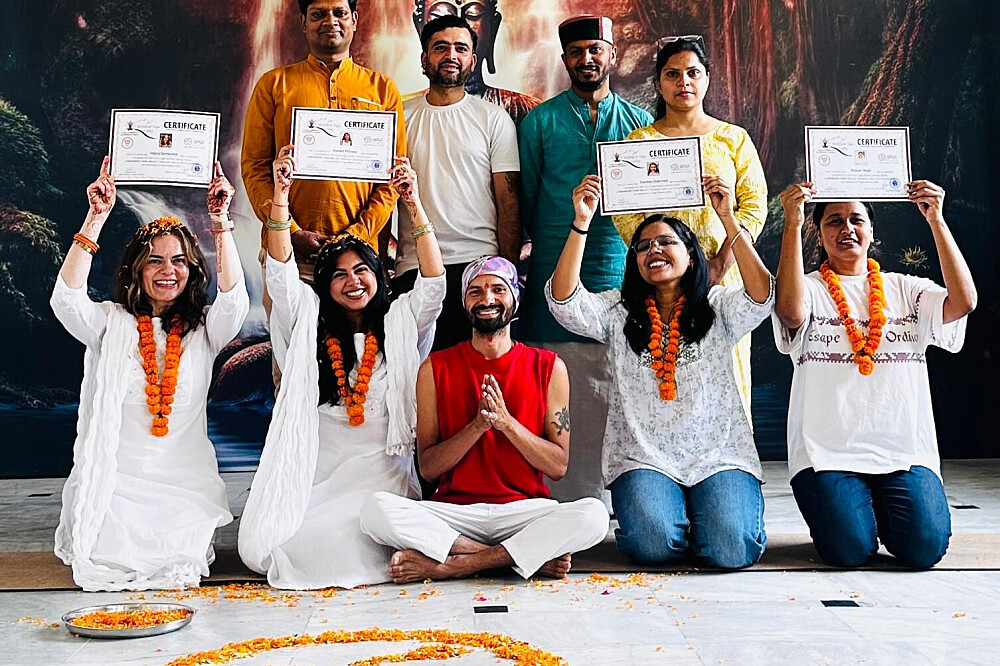
What the certificate records is that you completed a structured curriculum (daily practice, breathwork and meditation, anatomy, philosophy, and the mechanics of teaching a class) and passed the school's assessment. It doesn't mean you'll feel ready to lead a full room of beginners the week you get home, and good schools say so plainly. Think of it as the start of learning to teach rather than the end of it.
A typical timetable starts before dawn with cleansing practices and pranayama, moves into a long asana class, and after breakfast settles into lectures on anatomy, philosophy and teaching methodology, with a second practice in the late afternoon and chanting or meditation in the evening. Ask for the actual timetable for your dates rather than the sample on the website, and ask when the rest day falls and what the kitchen does on it.
Squeezed into a residential course, those hours make for long days. The programmes in this guide run a median of 24 days, which works out at roughly 8.3 hours of training a day before any rest days come out of the timetable.
What it costs, and what the price covers
The price summary at the top of this page is taken from the programmes listed below, using the per-person price each school sets on its listing. In India that fee usually bundles tuition with a bed and meals, so two courses at the same price can be very different deals. Line up the same things for each school before you compare them:
- The room: shared or private, attached or shared bathroom, hot water, air conditioning or a fan, and whether it's inside the school or in a guesthouse down the road.
- The food: which meals are served and on which days, and whether the kitchen can cope with an allergy. Many schools serve simple vegetarian food in the sattvic tradition.
- The paperwork: whether the certificate is issued in the name the school is registered under, and what happens if you miss sessions through illness.
- The materials: manuals, a mat, cleansing kits such as a neti pot, and any books you'll be asked to buy on arrival.
- The extras: airport pickup, excursions, and whether the deposit is refundable if your plans change.
Only some schools publish an itemised list of what's included. Where they do, the summary above counts the items that come up most often. For the rest, ask for the list in writing before you pay a deposit. It settles most arguments before they start.
How to check a school's registration
If you plan to register as a teacher afterwards, the school's status matters more than the design of the certificate. Yoga Alliance's certificate requirements say you'll need proof that you completed a Registered Yoga School's training, and the certificate has to show the school's name exactly as it is registered, the level of training, the completion date and your legal name, signed by someone at the school other than you.
So search for the school in the public directory before you pay anything. Check that the school itself, not just one of its teachers, holds an RYS 200 listing, and that the name in the directory matches the name that will go on your certificate; trading names and registered names don't always match. If a school says it's registered and you can't find it, ask for the directory link. A school with a current listing can send it in a minute.
Registration tells you that a curriculum was submitted against a published standard. It doesn't tell you who will teach your group. Ask who the lead trainers are for your dates, how long they've been running teacher trainings, and how many students share a group. The summary above also shows how many programmes in this guide mention Yoga Alliance in their own description: treat a mention as a claim to check, not as proof.
Rishikesh, Goa or Kerala
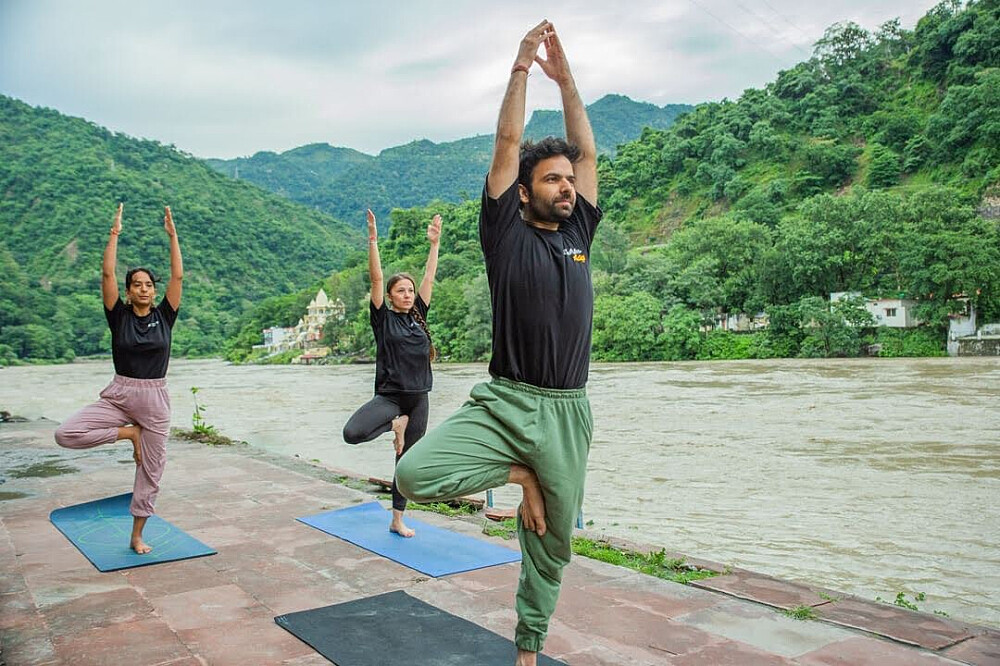
Rishikesh, on the Ganga where it leaves the Himalayan foothills in Uttarakhand, is the town most people picture when they think of teacher training in India. The upside of going to the centre of the scene is choice and company: a dense cluster of schools, evening aarti on the ghats, cafés full of other trainees. The downside is the same crowd. Quality varies enormously, and a polished website tells you very little. It's a pilgrimage town, so expect vegetarian food and quiet nights.
Seasons shape the experience there. Mornings in the foothills are cold in winter, the months before the monsoon get hot, and the monsoon itself brings heavy rain that can close mountain roads. Spring and autumn are the busy windows, and the best-known schools fill first.
Goa swaps the pilgrimage atmosphere for the beach. Courses there tend to cluster in the dry season after the monsoon, when the coast is at its most comfortable, and the setting feels closer to a holiday, which some students love and others find distracting on a course that asks for long days of study.
Kerala, in the far south, has a long association with Ayurveda, and trainings there often fold in Ayurvedic cooking or lifestyle teaching. The clifftop at Varkala is a popular base. Kerala also gets two monsoons: Kerala Tourism notes that the south-west monsoon arrives in June and the north-east monsoon in mid-October, so check what the weather will be doing on your dates before you choose the coast.
Pick the region for the months you can travel, then the school. The table below shows where the programmes in this guide run today.
| Where | Programmes | Length | From-price (US$) |
|---|---|---|---|
| Rishikesh & Uttarakhand | 9 | 22–26 days | US$360 – US$1,350 |
| Goa | 1 | 20 days | US$2,655 |
Choosing between schools
Start with style. Plenty of courses in Rishikesh call themselves multi-style, which usually means a Hatha foundation with Ashtanga or Vinyasa on top. If you already know what you want to teach, choose a school whose daily practice is that style. If you don't, a multi-style course lets you try several before you specialise, and the specialist courses (Kundalini, Yin, trainings that fold in meditation or Ayurveda) tend to make more sense as a second training than a first.
Then look at the people. A school is only as good as the teachers in the room on your dates, so ask by name who leads the course, how much of the teaching they do themselves, and how you'll be assessed: a practical teaching exam, a written test, or both. Ask what support you get if you fall ill. An upset stomach in the first weeks is common enough that a good school already has a plan for it.
Finally, read the terms of the deposit. Schools commonly ask for one to hold your place; check whether it's refundable, transferable to later dates, or neither, and get the answer in writing.
Before you travel
Check your visa early. India's official e-Visa site lists attending a short-term yoga programme among the purposes of the e-Tourist visa, while its rule for other short courses excludes those that end in a qualifying certificate. A teacher training ends in a certificate, so read the current wording for your nationality and ask the school which visa its students travel on.
Pack for the climate you'll actually meet: layers for cold dawn classes in the foothills, light cotton for the south, and your own mat if you're particular about it. Give yourself a quiet day to get over the journey before the timetable starts, and leave some slack at the end to see a little of India before you fly home.